

Book your demo
Ditch the sales tax complexity.
Ditch the sales tax complexity.
Talk to a TaxJar expert today and automate your compliance from calculation to filing.
Book your demoAre ticket fees taxable? Sales taxability for ticket-related fees
A recent Arizona Court of Appeals court decision offers a practical reminder: a fee listed separately at checkout may still be part of the taxable admission price.
When customers buy tickets to events, they often see more than the face value. Facility fees, venue fees, service fees, delivery charges, parking fees, and other types of fees can all appear at checkout.
The resolution of an Arizona case involving the Arizona Cardinals is a helpful example for ticket sellers, venue operators, and event businesses. It shows why businesses should review how mandatory ticket-related fees are set up, collected, and taxed.
Background on the case
The Arizona Cardinals collected a Facility Use Fee with tickets sold for events at State Farm Stadium. The fee appeared separately from the ticket’s face value.
The Cardinals argued that the fee should not be included in their taxable revenue because they collected it for the stadium authority rather than keeping it as their own income.
Arizona’s Department of Revenue disagreed. The Arizona Tax Court, followed by the Arizona Court of Appeals, found that the fee was part of the Cardinals’ taxable gross income for Arizona transaction Privilege Tax, or TPT, purposes.
Though commonly referred to as a sales tax, TPT is actually a tax on a vendor for the privilege of doing business in the state. This tax is essentially Arizona’s version of a sales and use tax and is handled similarly to sales and use tax in other states.
Why Arizona treated the fee as taxable
The main takeaway is simple: showing a fee separately doesn’t automatically make it non-taxable.
Arizona looked at how the fee worked in practice, not just what the parties called it. The Facility Use Fee was required to purchase a ticket, charged as part of the ticket sale, and collected by the Cardinals through the ticketing process.
Although the money was later transferred under the parties’ agreements, the court found that the Cardinals weren’t simply acting as an agent collecting money for someone else.
For businesses reviewing a similar fee, ask yourself:
- Is the fee required to buy the ticket?
- Is it connected directly to admission or use of the venue?
- Who sets the fee and controls ticket distribution?
- Who collects payment from the customer?
- Does the business have a documented agency relationship with the party that ultimately receives the funds?
- Do state or local rules specifically address this type of fee?
Then use the answers to guide your next step:
- Required and tied to admission: Review whether the fee should be included in the taxable ticket price.
- Collected for another party: Confirm there is a documented agency relationship and retain supporting records.
- Optional or separate service: Review the fee under the tax rules for that specific service.
- Specific local guidance exists: Follow the applicable state or local rule.
- Unclear outcome: Review the fee by jurisdiction before configuring tax.
This is not a nationwide rule for ticket fees
Like all other taxability rules, tax treatment for ticket-related charges varies by state and, in some cases, by city or local jurisdiction. This decision also involved a specific Facility Use Fee, particular agreements, and the Cardinals’ role in selling and collecting payment for tickets.
It’s still a useful example of a broader sales tax principle. When a mandatory charge is closely tied to a taxable sale, a tax authority may include that charge in the taxable sales price.
That principle can matter for more than just sports and live entertainment. Businesses in travel, hospitality, attractions, events, and online marketplaces may also collect mandatory charges alongside a primary sale.
A practical review for ticket sellers and venues
This case is a good reason to review how ticket-related fees appear in your business. A review can help answer practical questions early, including:
- Which fees are mandatory and which are optional?
- Are mandatory fees included in the taxable ticket price where required?
- Are fees configured consistently across ticketing platforms and point-of-sale systems?
- Does the business have documentation supporting any non-taxable treatment?
- Have state or local rules changed since the fee was first introduced?
The main takeaway
For businesses that sell tickets or collect event-related charges, the taxability of those fees depends on the jurisdiction’s rules and on how the fee works in the transaction. Taxability rules change often, so it’s important to review how each state handles these fees regularly.
That review can be challenging when selling through multiple ticketing platforms, point-of-sale systems, or sales channels. A good solution is to automate this process with a tool like TaxJar.
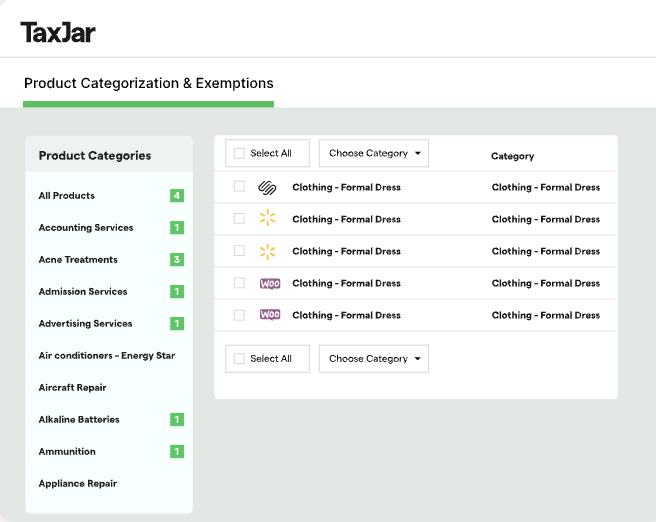
TaxJar applies (or exempts) sales tax at checkout using transaction details like customer location, and line-item taxability settings, supporting consistent tax logic when mandatory fees are included alongside admission charges. See how TaxJar can help keep your business compliant with our free, 30-day trial. Want help getting set up? Reach out to our team for one-on-one guidance.
It's time to solve your tax complexity
Talk to a TaxJar expert about automating your sales tax compliance.